Introduction
Flip a seal backward, and your hydraulic cylinder fails. That simple mistake causes immediate leaks, pressure loss, and costly downtime. Industry analysis shows that 65% to 90% of hydraulic system failures stem from contamination and seal issues, with incorrect installation making up a large share of these problems.
Trained technicians, experienced maintenance personnel, and equipment operators with hydraulic knowledge should handle seal installation. The stakes are high—improper seal direction triggers rapid leaks, pressure loss, contamination, and safety hazards.
For heavy machinery like excavators, seal failures mean serious downtime. A single failure can cost over $100,000 in lost revenue during a six-week repair period.
This guide covers correct seal direction and orientation during installation—why direction matters, how to identify proper orientation, and step-by-step procedures for perfect alignment.
Key Takeaways
- Seals must face the pressure source to create an effective seal
- U-cups, V-packing, and dynamic seals require specific orientation to prevent leaks
- Wrong seal direction leads to immediate leaks and premature cylinder failure
- Verify seal orientation before assembly to avoid costly rework
- Proper identification marks and visual cues eliminate installation guesswork
Understanding Seal Direction and Why It Matters
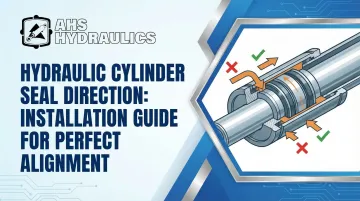
Hydraulic seals work by using system pressure to energize the sealing lip against the sealing surface. When you apply pressure, it forces the flexible lip tighter against the rod or bore, creating the seal.
This pressure-energized design is fundamental to how modern hydraulic seals function.
Installing a seal backwards means the pressure pushes the lip away from the sealing surface instead of against it. This results in immediate leaks or rapid seal failure under pressure. The hydraulic fluid cannot expand the lip against the cylinder wall, and the seal may be extruded into the clearance gap between components.
Seal Types and Their Directional Requirements
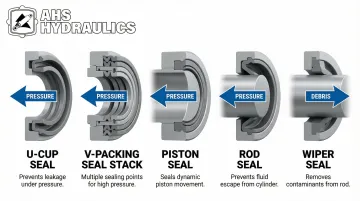
Because seals rely on pressure direction to function, each seal type has specific orientation rules:
- U-cups - Lip faces pressure; the open "U" shape must face the pressure source to allow fluid to energize the lips
- V-packing seals - Stacked with all lips facing pressure; the entire stack opens toward the pressure source
- Piston seals - Typically uni-directional (lip faces pressure side) or bi-directional for double-acting cylinders
- Rod seals - Lip faces internal cylinder pressure (inward, away from the wiper)
- Wiper seals - Lip faces external contaminants (outward, opposite to rod seals)
The Cost of Getting It Wrong
Analysis of 2,000 seal damage cases identified faulty installation as the number one cause of seal failure.
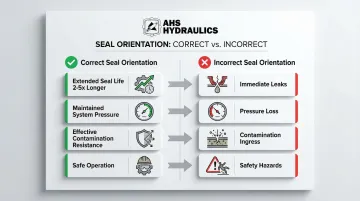
The difference is dramatic. Properly installed seals can last 2-5 times longer than incorrectly oriented seals, directly affecting:
- Seal life expectancy - Correct orientation maximizes wear distribution
- System efficiency - Proper sealing maintains pressure and reduces energy waste
- Contamination resistance - Correctly facing wipers prevent dirt ingress
- Operational safety - Preventing sudden pressure loss protects operators
Prerequisites and Safety Considerations
Before beginning seal installation, confirm these critical safety requirements:
System Depressurization: The cylinder must be fully depressurized and disconnected from hydraulic lines. OSHA 29 CFR 1910.147 requires complete energy isolation before maintenance.
Attempting seal work on a pressurized system can cause serious injury or death from stored energy release.
Correct Seal Specifications: Verify you have the correct replacement seals for your specific cylinder type, bore size, and rod diameter. Mismatched seals cannot be installed in the correct orientation and will fail regardless of direction.
Seal kits must match your exact cylinder specifications. For example, manufacturers like HydraWolf Hydraulics design seal kits for specific bore and rod dimensions to ensure proper fit and orientation.
Clean Work Environment: The work area must be clean, well-lit, and free from contaminants. Particles as small as 5 to 15 microns can damage seal lips and score cylinder rods.
Contamination is responsible for 70% to 90% of hydraulic system wear and failure.
Tools and Materials Required
Essential Tools
- Seal installation tools or cones (prevents seal damage during insertion)
- Rubber mallet
- Wrenches sized for your gland nuts
- Clean lint-free rags
- Hydraulic fluid for lubrication
- Emery cloth for smoothing surfaces
Required Materials
- Complete seal kit (verify bore size, rod diameter, and seal profile match your cylinder)
- Hydraulic fluid from your system for lubrication (never petroleum-based lubricants—they damage seals)
- Replacement seals verified for correct size and application
HydraWolf Hydraulics offers seal kits with multiple O-ring sizes and materials for various cylinder specifications. Kits range from $75 to $185 and include all necessary seals for complete cylinder refurbishment.
Step-by-Step Seal Installation Guide for Correct Orientation
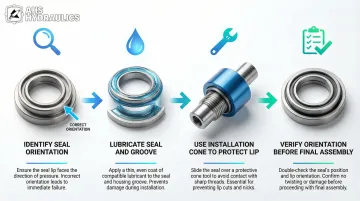
Proper seal installation follows a specific sequence: cylinder disassembly → inspection and cleaning → seal orientation identification → lubrication → careful installation → reassembly.
Shortcuts or rushing this process will cause directional errors and premature seal failure.
Identifying Correct Seal Orientation Before Installation
Look for visual markers first. U-cups and rod seals have a visible lip or flared edge that must face toward the pressure source. For rod seals, this means facing into the cylinder. For U-cups on pistons, the lip faces toward the piston. Many modern seals include directional arrows or markings on the seal body.
Use the tactile test when markings aren't visible. Run your finger around the seal profile. The lip should feel like it would naturally deflect away from the pressure source when installed correctly. If you're unsure, check the seal kit instructions or manufacturer documentation.
Determining Pressure Direction:
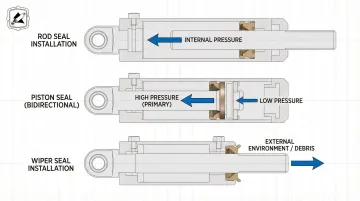
- Rod seals - Face internal cylinder pressure (inward)
- Piston seals - Face pressure from the rod-end or cap-end depending on cylinder design
- Wiper seals - Always face external environment (lip points outward)
Once you've identified seal orientation, you're ready to begin installation with the rod seals.
Installing Rod Seals with Correct Direction
Rod seals are the most critical for directional accuracy because they directly seal system pressure. Backwards installation results in immediate external leaks.
Follow these steps for proper rod seal installation:
- Position the gland or rod assembly so you can clearly see the seal groove
- Place the rod seal with the lip facing INTO the cylinder (toward the internal pressure)
- Lubricate the seal with clean hydraulic fluid
- Use a seal installation cone or carefully work the seal over the rod threads to avoid damaging the lip
The seal should have a lead-in chamfer (typically 15-20 degrees) to guide installation and prevent lip damage during insertion.
Installing Piston Seals with Correct Direction
Piston seal installation requires identifying pressure direction first:
- Identify which side of the piston faces higher pressure during operation (typically the rod-end on single-acting cylinders)
- Install the piston seal with the lip facing that high-pressure side
- Ensure the seal seats fully in the piston groove before installing backup rings or wear rings
Some piston seal designs are bi-directional (symmetrical) and work in either direction, but when in doubt, follow the seal kit instructions or consult technical support.
Installing Additional Seals (Wipers, Wear Rings, Backup Rings)
Wiper Seal Installation:
The wiper lip always faces outward (toward the external environment) to scrape contaminants off the rod during retraction. This is opposite to rod seals and a common source of confusion.
Properly installed wipers prevent contamination from entering the cylinder, which protects the rod seal and extends system life.
Wear Rings and Backup Rings:
Key installation points:
- Wear rings are typically non-directional and can be installed either way
- Backup rings (if directional) install on the pressure side of the primary seal
- Backup rings prevent seal extrusion under high pressure conditions
V-Packing Sets:
Stack all rings with lips facing the same direction (toward pressure source). Install the male and female adapters in correct sequence and apply appropriate compression according to manufacturer specifications.
Verifying Correct Seal Orientation Post-Installation
Visual Verification Before Final Assembly
With the cylinder partially assembled, visually confirm all seal lips are facing their respective pressure sources. This is your last opportunity to catch orientation errors before full assembly.
Take photos for your records or to consult with technical support if you're uncertain about any seal positioning.
Pre-Pressurization Check
Before reinstalling the cylinder on equipment, carefully extend and retract the rod by hand to feel for unusual resistance or binding that might indicate a twisted or backwards seal.
Initial Pressure Test Procedure
Follow these steps for safe initial testing:
- Reinstall the cylinder
- Apply low pressure first (25-30% of operating pressure)
- Check all seal areas for leaks
A backwards seal will often show immediate weeping or seepage even at low pressure. If any leaks appear during initial testing, depressurize immediately and verify seal direction before assuming the seal is defective.
Research shows that 60-70% of "defective" seal warranty claims are actually installation errors. Checking seal orientation first can save time and avoid unnecessary parts replacement.
Common Directional Errors and How to Fix Them
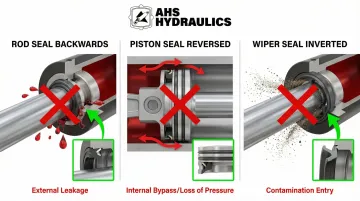
Seal direction errors account for the majority of premature hydraulic cylinder failures in the field. Recognizing these three common installation mistakes can save hours of troubleshooting and prevent costly downtime.
Rod Seal Installed Backwards (Lip Facing Outward)
The most frequent directional error shows up immediately as external oil leaking from around the rod at the gland. Oil weeps from the seal within the first few cycles of operation.
This happens when the rod seal lip is installed facing outward instead of inward toward cylinder pressure. The seal can't contain hydraulic fluid because the pressure pushes against the back of the seal rather than forcing the lip against the sealing surface.
How to fix it:
- Depressurize the system completely
- Disassemble the gland and remove the rod seal
- Reinstall with seal lip facing INTO the cylinder (toward pressure)
- Verify orientation visually before reassembly—the lip should curve toward the cylinder body
Piston Seal Reversed on Piston
Symptoms of reversed piston seals:
- Cylinder extends or retracts sluggishly
- Internal bypass causes rod to drift under load
- Rod seal shows premature wear from excessive pressure
- Loss of holding force when cylinder should be locked
The piston seal lip must face the high-pressure side to function correctly. When reversed, pressure bypasses the piston rather than sealing against the cylinder bore, creating internal leakage.
Fix: Disassemble the cylinder and remove the piston from the rod. Reinstall piston seals with lips facing the high-pressure side of the piston. Torque the piston locknut to manufacturer specification (typically 100-150 ft-lbs for 2-4" bore cylinders, but verify for your specific model).
Wiper Seal Installed with Lip Facing Inward
Unlike rod and piston seals, the wiper seal lip must face OUTWARD toward the external environment. When installed backward (lip facing inward like a rod seal), dirt and contamination enter the cylinder freely, and the wiper often tears within days.
The wiper's job is to scrape contaminants off the rod during retraction. The lip must face outward to perform this scraping action effectively.
Fix: Remove and reinstall the wiper seal with the lip facing outward. You should feel the lip drag slightly against the rod surface when pulling the rod through during reassembly—this confirms correct orientation.
Pro Tips for Perfect Seal Alignment
Use the "Kidney Bean" Folding Technique
When working with U-cup seals, squeeze the seal into an oval shape with the lip facing the correct direction. Insert one edge into the groove first, then work the rest of the seal in.
This prevents lip damage and ensures proper orientation.
Lubricate Before Installation
Apply hydraulic fluid before installing any seal:
- Use the same fluid type as your hydraulic system
- Coat the seal and groove surfaces evenly
- Avoid petroleum jelly or incompatible lubricants
Proper lubrication reduces friction during initial cycles and helps seals seat correctly in their grooves.
Mark the Pressure Side During Disassembly
Use a permanent marker or paint pen to mark the pressure side of your cylinder components during disassembly. This eliminates guesswork during reassembly and prevents directional errors.
Contact Technical Support When Uncertain
For critical applications or if you're uncertain about seal direction, contact the manufacturer's technical support before installation. HydraWolf Hydraulics provides direct access to engineers and builders who work with these same components in the field and can verify seal orientation for your specific cylinder application.
Keep Photographic Records
Take photos of seal installation orientation during your first rebuild. These reference photos are invaluable for future maintenance and training new technicians on your team.
Conclusion
Correct seal direction is non-negotiable for hydraulic cylinder performance. The difference between a seal that lasts years and one that fails immediately often comes down to proper orientation during installation.
Following best practices makes all the difference:
- Methodical preparation before seal installation
- Careful attention to seal lip direction during assembly
- Thorough post-installation verification and pressure testing
Taking an extra five minutes to verify orientation can save thousands of dollars in downtime costs and prevent safety hazards. If you have questions about seal installation or need technical guidance, HydraWolf's team of engineers and fabricators provide direct support to help ensure correct assembly the first time.
Frequently Asked Questions
Which direction should a hydraulic cylinder seal face?
Dynamic seals must have their sealing lip facing the pressure source. Rod seals face into the cylinder, piston seals toward the high-pressure side, and wipers face outward to scrape contaminants from the rod.
What happens if you install a hydraulic seal backwards?
Backwards installation causes immediate leaks and rapid seal failure because pressure pushes the lip away from the sealing surface instead of against it. This results in system pressure loss and potential contamination.
How do you know if a U-cup seal is installed correctly?
The open lip or flared edge must face the pressure source—the "U" should open toward the hydraulic fluid. Most seals include directional arrows or markings to confirm proper orientation.
Do all hydraulic seals have a specific direction?
Most dynamic seals (U-cups, V-packing, rod seals) are directional and must face pressure correctly. O-rings, wear rings, and certain symmetrical seals are non-directional. Always consult manufacturer documentation when uncertain.
Can you test seal direction before full assembly?
Yes. Visually verify all seal lips face their respective pressure sources before final assembly. Conduct a low-pressure test (25-30% operating pressure) after installation to confirm proper sealing before returning equipment to full service. A backwards seal will often leak even at low pressure.
What's the difference between rod seal and wiper seal orientation?
Rod seals face INWARD (lip toward internal cylinder pressure) to contain hydraulic fluid, while wiper seals face OUTWARD (lip toward external environment) to scrape contaminants off the rod. Installing these backwards is a common error that compromises both sealing and contamination protection.