Introduction
Hydraulic cylinders are the powerhouse behind heavy machinery—from firewood processors and log splitters to construction equipment and agricultural machines. When these critical components fail, entire operations grind to a halt.
Proper maintenance directly determines equipment performance, uptime, and lifespan.
Neglecting hydraulic cylinder maintenance creates serious operational and financial risks. Unexpected downtime can cost manufacturers $50,000 to $200,000 per hour. Reactive repairs typically run 3-4 times more expensive than preventive maintenance.
Beyond costs, cylinder failures pose safety hazards including load drops, equipment damage, and operator injury.
You'll learn how to spot warning signs early, choose the right maintenance approach for your operation, build practical schedules based on usage intensity, and avoid costly mistakes that shorten cylinder life.
Key Takeaways
- Preventive maintenance costs 3-4x less than reactive repairs and extends cylinder life by 30-50%
- Leaks, performance drops, unusual noises, and visible wear signal immediate maintenance needs
- Daily checks for high-use equipment; annual inspections minimum for all cylinders
- Match your approach to equipment criticality: routine for standard operations, predictive for critical systems
- Catching issues early prevents costly breakdowns and unplanned downtime
Why Hydraulic Cylinder Maintenance Is Important
Regular hydraulic cylinder maintenance isn't just good practice—it's essential for protecting your equipment investment and maintaining operational reliability across all heavy machinery operations.
Performance and Efficiency Impact
Worn seals and contaminated fluid silently destroy productivity. Research shows that internal leakage of just 3-5% reduces working pressure by 10% and piston velocity by up to 45%. This degradation directly impacts lifting capacity, cycle times, and pushing force. In some applications, leakage-induced efficiency losses have dropped overall equipment effectiveness to just 30-50%.
Contaminated hydraulic fluid accelerates seal wear and creates scoring on cylinder rods. Since contamination causes 70% of hydraulic failures, maintaining clean fluid is critical.
Even minor internal leakage forces hydraulic pumps to work harder, increasing energy consumption and generating excess heat.
Lifespan and Replacement Cycles
The difference between well-maintained and neglected cylinders is dramatic:
- Properly maintained cylinders: 15-20+ years of service life
- Neglected cylinders: 5-7 years before requiring replacement
- High-quality filtration: Can extend cylinder life to 20+ years
Preventive maintenance extends component life by catching problems early. Systematic inspection and maintenance can eliminate up to 85% of system failures and extend component life by 65%.
Replacing seals during scheduled maintenance costs far less than repairing damage from failed seals that score cylinder bores.
Safety and Operational Standards
Beyond performance impacts, cylinder failures create serious safety hazards. Sudden loss of hydraulic pressure can cause load drops, crushing hazards, and equipment damage. Safety standards legally require compliance and protect operators.
Key regulatory requirements:
- OSHA 29 CFR 1910.147: Lockout/tagout procedures for controlling hazardous energy during maintenance
- OSHA 29 CFR 1910.212: Machine guarding requirements to protect operators from moving parts
- ISO 6020-2: Metric mounting dimensions and design guidelines for 160 bar cylinders
- NFPA standards: Mounting configurations, rod specifications, and seal styles
Cost Savings: Preventive vs. Reactive
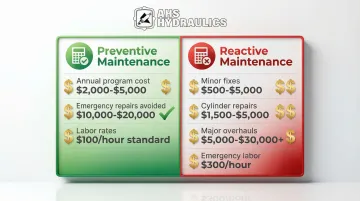
Understanding these safety requirements leads directly to the financial reality: Reactive repairs cost 3-4 times more than proactive maintenance programs. Emergency service calls add additional premiums—labor rates can jump from $100/hour to $300/hour for after-hours repairs.
Cost comparison example:
- Annual preventive maintenance: $2,000-$5,000 per machine
- Emergency repair savings: $10,000-$20,000 avoided
- Contamination multiplier: Simple $1,000 repairs escalate to $4,000-$6,000 when contamination spreads
- Downtime costs: A failed cylinder can idle an entire machine, creating project delays and lost productivity that far exceed the repair expense
Types of Maintenance for Hydraulic Cylinders
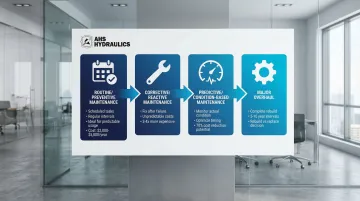
Hydraulic cylinder maintenance isn't one-size-fits-all. The right approach depends on equipment criticality, usage intensity, operating environment, and your operational priorities. Understanding these four maintenance strategies helps you balance cost, reliability, and resource allocation.
Routine / Preventive Maintenance
Preventive maintenance involves scheduled tasks performed at regular intervals regardless of cylinder condition, designed to prevent failures before they occur.
Typical tasks include:
- Visual inspections for external leaks around seals
- Checking hydraulic fluid levels and quality
- Inspecting rod surface for scoring, pitting, or corrosion
- Testing seals for early wear indicators
- Verifying mounting hardware tightness
- Cleaning external surfaces to prevent contamination
When this approach works best: Preventive maintenance is ideal for equipment with predictable usage patterns, moderate to heavy daily use, and applications where downtime must be minimized. It's the foundation of most successful maintenance programs.
Cost range: Agricultural operations typically spend $2,000-$5,000 annually per machine, with documented savings of $10,000-$20,000 in avoided emergency repairs.
Corrective / Reactive Maintenance
Corrective maintenance addresses problems only after they occur or when cylinders show clear signs of failure. This "run-to-failure" approach appears cost-effective initially but carries significant hidden costs.
Common triggers:
- Visible fluid leaks around rod or gland seals
- Noticeable performance degradation
- Unusual operational noises
- Complete cylinder failure
- Visible physical damage
Risks of reactive-only strategies: Relying too heavily on reactive maintenance creates unpredictable downtime, higher repair costs, and safety hazards.
When contamination enters the system during a failure, repair costs can increase by 300-500%. A simple $1,000 component replacement escalates to $4,000-$6,000 due to system flushing and fluid replacement.
These failures translate to significant expenses:
- Minor fixes: $500-$5,000 (hoses, fittings, small components)
- Cylinder repairs: $1,500-$5,000 (seal replacement, minor overhaul)
- Major overhauls: $5,000-$30,000+ (complete rebuild, bore repair)
Predictive / Condition-Based Maintenance
Predictive maintenance schedules service based on actual cylinder condition using monitoring tools and performance data rather than fixed time intervals.
Monitoring methods:
- Pressure testing to identify internal leakage
- Thermal imaging to detect hot spots indicating friction
- Vibration analysis for bearing and mounting wear
- Hydraulic fluid analysis for contamination levels
- Acoustic emission sensors to detect early seal degradation
Benefits for critical equipment: Predictive maintenance optimizes service timing, reduces unnecessary maintenance, and catches problems in early stages. Systematic inspection and monitoring can reduce hydraulic maintenance costs by 70% by performing maintenance only when condition data indicates it's necessary.
ROI considerations: Monitoring technology requires upfront investment, but it pays dividends for high-value or critical equipment. Avoiding a single catastrophic failure often justifies the entire system cost.
Major Maintenance / Overhaul
Major overhaul involves complete cylinder disassembly, inspection, and rebuilding with replacement of seals, bushings, and worn components.
When overhaul is needed:
- After extended service life (typically 5-10 years depending on usage intensity)
- Following cylinder failure that damaged internal components
- When multiple components show wear during inspection
- During planned equipment refurbishment
What's involved:
- Complete cylinder disassembly and cleaning
- Detailed inspection of all components (barrel, rod, piston, seals)
- Replacement of wear parts (seals, bushings, bearings)
- Bore honing or re-chroming if needed
- Reassembly with new seals and proper torque specifications
- Pressure testing to verify performance
Rebuild vs. replace decision: Rebuilding is more affordable than replacement in most cases. However, if repair costs approach 50-60% of a new cylinder's price, replacement often provides better long-term value.
Consider the cylinder's remaining service life and the criticality of the application when making this decision.
How to Check If Your Hydraulic Cylinder Needs Maintenance
Early detection prevents small problems from becoming major failures. These warning signs allow operators to schedule maintenance before cylinders fail during critical operations.
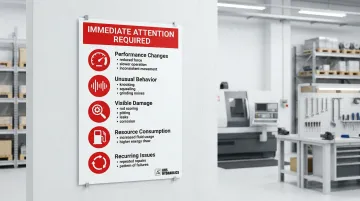
Performance or Output Changes
Reduced force or slower operation:
- Cylinder extends or retracts more slowly than normal
- Reduced lifting capacity or pushing force
- Difficulty completing full stroke
- Longer cycle times for repetitive operations
Inconsistent performance:
- Erratic or jerky movement during operation
- Cylinder drift (rod slowly retracts under load when not pressurized)
- Pressure fluctuations during normal cycles
- Hesitation at the start of stroke
Research indicates that internal leakage causing a 38% reduction in flow between low and high pressure represents significant seal wear requiring immediate attention.
For piston ring seals, leakage of 1-3 cubic inches per minute is normal, but leakage exceeding 1 GPM indicates seal replacement is needed.
Unusual Behavior or Operation
Abnormal noises:
- Knocking sounds during extension or retraction
- Squealing indicating seal friction
- Grinding noises suggesting internal wear or contamination
Irregular operation:
- Stuttering or jerky movement instead of smooth travel
- Unexpected stops mid-cycle
- Inconsistent speed throughout the stroke
Temperature anomalies:
Cylinders running excessively hot to the touch indicate internal friction, fluid problems, or overloading. Thermal imaging can detect hot spots before they cause failure.
Visible Wear, Damage, or Irregularities
Beyond performance issues, physical inspection reveals damage that leads to failure.
Rod surface damage:
Even minor rod damage destroys seals—inspect for:
- Scoring (scratches or grooves in chrome finish)
- Pitting (small craters from corrosion)
- Corrosion or rust
- Bent or misaligned rod
Fluid leaks:
- Oil pooling around rod seals or gland
- Visible fluid film on rod during operation
- Wet spots on cylinder body
- Hydraulic fluid dripping from mounting points
External damage:
- Dented or damaged cylinder barrel
- Bent or broken rod eyes or mounting clevises
- Loose or damaged mounting hardware
- Misalignment causing side-loading
Increased Resource Consumption
Higher hydraulic fluid usage:
Frequent need to top off the reservoir indicates external or internal leakage. Track fluid consumption—sudden increases signal developing problems.
Increased energy consumption:
- Hydraulic pump working harder to maintain pressure
- Motor drawing higher current than baseline
- System running hotter than normal operating temperature
Research shows that reducing internal leakage from 31% to 7% significantly improves volumetric efficiency. This demonstrates how leakage forces systems to consume excess energy for the same work output.
Recurring Issues or Downtime
Pattern recognition:
- Seals requiring constant adjustment
- Small leaks that keep returning
- Intermittent performance issues becoming more frequent
- Temporary fixes lasting shorter periods each time
These patterns indicate underlying problems requiring comprehensive maintenance rather than continued patch repairs. Addressing root causes prevents escalating failures and reduces total maintenance costs.
Hydraulic Cylinder Maintenance Schedule (General Guidelines)
Maintenance intervals must be adapted based on your specific conditions:
- Usage intensity (hours per day)
- Operating environment (temperature extremes, contamination levels)
- Load factors (constant heavy loads vs. intermittent light use)
- Equipment criticality
Use these guidelines as a starting framework, then adjust based on what you observe.
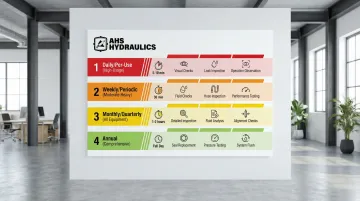
Daily / Per-Use Checks (High-Usage Equipment)
Quick visual inspection (5-10 minutes):
- Check for external leaks around rod seals and gland
- Inspect rod surface for new damage, contamination, or corrosion
- Check for no fluid pooling around cylinder
- Observe first few operation cycles for smooth movement
- Listen for unusual noises during initial cycles
- Confirm consistent speed and no hesitation
These brief checks catch obvious problems before they cause damage or safety hazards.
Weekly or Periodic Tasks (Moderate to Heavy Use)
Fluid system checks:
- Check hydraulic fluid level and top off if needed
- Inspect fluid condition (look for milky appearance indicating water contamination, burnt smell, or visible particles)
- Check reservoir temperature during operation
Connection and hose inspection:
- Inspect all hydraulic hoses connected to cylinder for wear, cracks, or leaks
- Check fittings for tightness and signs of weeping
- Confirm no hose chafing or contact with moving parts
Performance testing:
- Test cylinder under load for consistent performance
- Check that no cylinder drift occurs when holding load
- Confirm full stroke completion in both directions
Cleaning:
Clean rod and cylinder exterior to prevent contamination entry and allow better visual inspection of components.
Monthly / Quarterly Inspections (All Equipment)
Detailed component inspection:
- Examine rod chrome finish closely for any imperfections that could damage seals
- Check mounting hardware (pivot pins, clevises, rod eyes) for wear, play, or looseness
- Check cylinder alignment—look for signs of side-loading or binding
- Inspect rod boots or protective covers if installed
Fluid analysis (critical applications):
Send hydraulic fluid samples to a laboratory for analysis. Testing reveals:
- Particle count (ISO 4406 cleanliness code)
- Water content (should be below 40% saturation)
- Viscosity changes indicating fluid degradation
- Acid number (TAN) showing oxidation
- Metal analysis detecting wear metals
Improving fluid cleanliness by two ISO codes can extend component life by 60%. Target ISO 18/16/13 or better for modern high-pressure systems.
Annual or Long-Term Servicing
Comprehensive cylinder inspection:
This often requires removing the cylinder from equipment for detailed examination of all components.
Seal replacement:
Even if not actively leaking, seals have service life limits. Standard rubber seals typically last 1,000-5,000 operating hours, while high-performance seals can reach 8,000-20,000+ hours.
Harsh conditions (high pressure above 20 MPa or contamination) can reduce seal life to just 300-2,000 hours.
Pressure testing:
Test at 1.5 times rated pressure for 3 minutes to check for no external leakage or deformation. Check internal bypass by holding pressure at full extension and retraction while measuring flow from the open port.
System maintenance:
- Complete hydraulic system flush to remove accumulated contaminants
- Replace hydraulic fluid and all filters
- Professional inspection of internal components if any performance issues exist
Notes on Usage Variations
Low-usage scenarios (less than 500 hours/year):
You can extend intervals but never skip inspections entirely. Idle equipment can develop problems from seals drying out, corrosion forming on rods, and fluid degradation from moisture absorption.
High-usage continuous operation (4,000+ hours/year):
Shorten all inspection intervals by 30-50%. Consider implementing predictive maintenance technologies to optimize service timing and catch problems early.
Harsh environments:
Extreme temperatures, high contamination (dust, dirt, debris), or corrosive conditions (marine, chemical exposure) require increased inspection frequency.
Use protective measures like rod boots, extend rod wiper life, and consider more frequent seal replacement.
Conclusion
Hydraulic cylinder maintenance isn't optional—it's a strategic investment that delivers measurable returns through improved reliability, enhanced safety, and significantly lower total cost of ownership.
The data is clear: preventive maintenance costs 3-4 times less than reactive repairs while extending equipment life by decades.
The right maintenance approach balances scheduled preventive care with condition monitoring, avoiding both wasteful over-maintenance and risky under-maintenance. A structured, documented maintenance plan protects your equipment investment and keeps operations running smoothly.
When sourcing replacement components, quality matters. American-made hydraulic parts from direct manufacturers like HydraWolf Hydraulics deliver:
- Reliable components backed by engineering expertise
- Direct technical support from the team that designs and builds them
- Exact-fit replacement parts for firewood processors, log splitters, and heavy machinery
Proper maintenance combined with quality replacement parts ensures your hydraulic systems deliver decades of dependable service.
Frequently Asked Questions
Can you lubricate a hydraulic cylinder?
Hydraulic fluid lubricates all internal components—no additional internal lubrication is needed. However, external pivot points, mounting pins, and rod eyes require periodic greasing through grease fittings.
What kind of oil do you put in a hydraulic cylinder?
Use hydraulic fluid (not motor oil) with viscosity matched to your operating temperature—common grades include ISO 32, 46, or 68. Always use clean, quality fluid from reputable suppliers, as contaminated or incorrect fluid causes 70% of system failures.
How often should hydraulic cylinder seals be replaced?
Seals typically last 2,000-5,000 operating hours or 3-5 years depending on usage intensity. Preventive replacement before failure costs significantly less than repairing damage from failed seals that score bores and contaminate systems.
What causes a hydraulic cylinder to lose pressure?
Pressure loss stems from worn piston seals allowing internal bypass, damaged rod seals causing external leaks, or problems in the hydraulic circuit (valves, hoses, pump). Internal leakage is harder to detect but causes significant performance degradation.
How do you know if a hydraulic cylinder rod is damaged?
Inspect the rod chrome finish for scoring, pitting, or corrosion. Run your fingernail across the surface—you shouldn't feel ridges or rough spots. Even minor damage tears seals and causes rapid failure, though rods can often be rechromed if caught early.
What is cylinder drift and what causes it?
Cylinder drift is the slow retraction of the rod under load when hydraulic pressure is not being applied. It's caused by worn piston seals allowing internal fluid bypass from one side of the piston to the other. Excessive drift represents a safety concern and indicates immediate need for seal replacement—the cylinder cannot reliably hold loads.