Introduction
A failed coupling can shut down an entire firewood processing operation or hydraulic system in minutes. Pump couplings form the critical mechanical link between motors and pumps in heavy machinery—from firewood processors to construction equipment. Incorrect coupling selection leads to premature bearing failure, seal damage, and unexpected downtime during peak operations, even in perfectly maintained equipment.
Proper coupling selection directly impacts equipment reliability, maintenance costs, and operational uptime—especially in demanding applications like commercial log splitting, agricultural machinery, and continuous-duty hydraulic systems. Understanding these application demands is essential for choosing the right coupling.
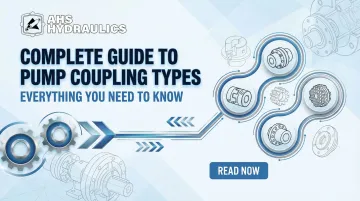
This guide covers the three main types of pump couplings, how they differ in handling torque and misalignment, and how to match the right coupling type to your specific equipment requirements.
Key Takeaways
- Transfer rotational power from motors to pumps in hydraulic systems and heavy machinery
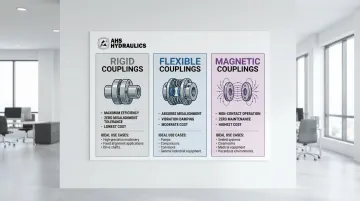
- Three main types: rigid (maximum torque, zero misalignment tolerance), flexible (accommodates misalignment, absorbs shock), and magnetic (non-contact, hermetically sealed)
- Each type balances efficiency, alignment tolerance, and protection differently
- Choose based on alignment precision, torque needs, and operating conditions
- Proper selection prevents costly bearing and seal failures in demanding applications
What Is a Pump Coupling?
A pump coupling is the mechanical device that connects the rotating pump shaft to the motor drive shaft, enabling efficient power transmission between the two components. This connection point determines how effectively rotational force transfers from the motor to the pump while managing the stresses that occur during operation.
Heavy machinery applications use couplings throughout—from firewood processors and log splitters to hydraulic systems in construction equipment and agricultural machinery. They're practical, working components that directly impact equipment uptime, maintenance frequency, and operational costs.
In hydraulic systems, couplings connect motors to hydraulic pumps that power everything from splitting rams to conveyor drives, making them essential to reliable equipment performance.
Why Pump Coupling Selection Matters in Heavy Machinery
The wrong coupling choice costs machinery operators thousands in premature failures and downtime. Shaft misalignment causes over 50% of rotating equipment failures, with bearings and seals failing first.
One refinery saved over $9 million by improving pump reliability through precision alignment and upgraded coupling components.
What goes wrong without the right coupling:
- Premature bearing failure from excessive radial and axial loads
- Seal damage causing fluid leaks and contamination
- Shaft misalignment issues that compound over time
- Excessive vibration reducing operator comfort and component life
- Unexpected breakdowns during peak operations when downtime is most costly
These problems hit hardest in high-cycle operations. In continuous firewood processing or construction equipment, coupling failures cause cascading damage to expensive hydraulic pumps, motors, and drive components. Energy consumption can increase by up to 8.5% from misalignment alone, while maintenance costs represent 25% of a pump system's 20-year lifecycle expense.

Types of Pump Couplings
Pump couplings are not one-size-fits-all. They fall into three main categories based on how they handle torque transmission, misalignment tolerance, and operating conditions.
Each type addresses different operational challenges, from hydraulic pump systems requiring precise alignment to agricultural and construction equipment where vibration damping is critical.
The three primary categories include:
- Rigid Couplings — Designed for applications with precise shaft alignment and no flexibility requirements, common in fixed mounting systems
- Flexible Couplings — Accommodate minor misalignment while transmitting torque, ideal for heavy machinery exposed to vibration and shock loads
- Fluid Couplings — Use hydraulic fluid to transmit power, providing smooth operation and overload protection in variable-load applications
Understanding these distinctions helps match coupling characteristics to your specific application requirements, operating environment, and maintenance capabilities.
Rigid Couplings
Description
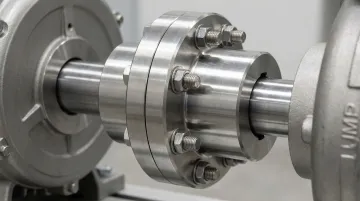
Rigid couplings create a solid, inflexible connection that firmly joins pump and motor shafts with no give or movement between them.
These designs use flanges, sleeves, or compression fittings to create what functions as a single, unified shaft assembly. The coupling transmits torque directly through metal-to-metal contact with no elastic or flexible elements.
How It Differs from Other Types
Rigid couplings cannot accommodate any misalignment—whether axial (end-to-end spacing), radial (parallel offset), or angular (shaft angle difference). Any misalignment transmits severe bending moments and shear forces directly to connected equipment.
They provide direct, 1:1 torque transmission with no cushioning characteristics, making them the most efficient but least forgiving coupling type.
Best Suited For
Ideal applications include:
- Close-coupled pump configurations where shafts are short, stiff, and can be precisely aligned
- Controlled indoor environments where thermal expansion is minimal
- Applications requiring maximum torque transmission efficiency with minimal power loss
- Situations where foundation settling and operational vibration are very low
- Operations with access to laser alignment tools and regular maintenance schedules
Key Strengths
- Highest torque transmission efficiency—no power loss through flex elements
- Simple, cost-effective design with fewer components to maintain or replace
- Compact footprint ideal for space-constrained installations
- Zero backlash for precise positioning applications
- Lower initial cost compared to flexible alternatives
Limitations and Trade-Offs
While rigid couplings offer efficiency advantages, they demand strict operating conditions.
Critical drawbacks include:
- Requires perfect shaft alignment; even minor misalignment causes bearing and seal failure
- Cannot absorb vibration, shock loads, or thermal expansion
- Transfers operational stresses directly to connected equipment, accelerating wear
- Difficult to service—often requires moving entire motor or pump assembly for replacement
- Not suitable for outdoor equipment or mobile machinery where alignment shifts
Flexible Couplings
Description
Flexible couplings incorporate elastic or mechanical elements that allow controlled movement between pump and motor shafts while transmitting torque.
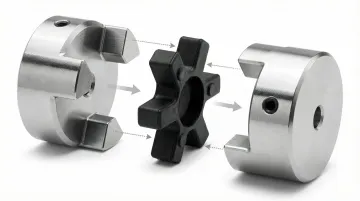
These designs use rubber inserts, metallic grids, thin disc packs, or gear teeth to handle misalignment and absorb vibration that would otherwise damage connected equipment.
Common designs:
- Elastomeric/jaw couplings: Rubber spider inserts between toothed hubs
- Grid couplings: Spring steel grid elements that flex under load
- Disc couplings: Thin metallic disc packs that bend to accommodate misalignment
- Gear couplings: Meshing gear teeth with lubrication
How It Differs from Other Types
Flexible couplings handle misalignment that would destroy rigid connections. Typical tolerances include 0.5-3° angular misalignment and 0.010-0.030 inches parallel offset, depending on coupling size and design.
Rather than transmitting vibration and shock loads directly through the drivetrain, flexible elements dampen these forces. This protects bearings and seals from excessive stress.
Best Suited For
These couplings excel in:
- Heavy-duty operations with unavoidable misalignment from thermal expansion, foundation settling, or operational vibration
- Outdoor equipment and mobile machinery where perfect alignment cannot be maintained
- High-cycle operations like continuous firewood processing or construction equipment use
- Applications prioritizing reduced bearing and seal maintenance over coupling maintenance
- Equipment operating in harsh environments with temperature fluctuations
Key Strengths
Primary benefits:
- Protects bearings, seals, and shafts by absorbing misalignment and vibration
- Reduces noise and operational harshness in heavy machinery
- Many designs allow coupling replacement without moving motor or pump (spacer-type configurations)
- Extended equipment life through stress reduction on connected components
- Accommodates thermal growth during operation without inducing stress
Limitations and Trade-Offs
Key considerations:
- More complex and expensive than rigid couplings
- Typical cost: $25-$75 for jaw couplers vs. $43 for rigid designs
- Elastic elements wear over time and require periodic inspection and replacement
- Grid and gear types require lubrication—standard grease every 6 months, specialty greases up to 3 years
- Approximately 75% of gear coupling failures stem from improper lubrication
- Slightly lower torque transmission efficiency compared to rigid designs
Magnetic Couplings
Description
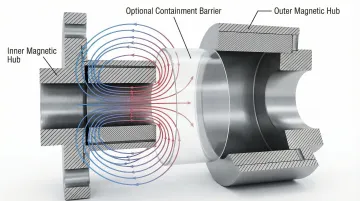
Magnetic couplings use magnetic fields to transmit torque between pump and motor shafts with no physical connection. Inner and outer magnet assemblies create a magnetic field across an air gap or containment barrier, transferring rotational force through magnetic attraction without mechanical contact. The containment barrier can create a completely sealed chamber, eliminating dynamic shaft seals entirely.
How It Differs from Other Types
The key difference is the absence of any mechanical connection. This design creates several unique characteristics:
- Zero wear on the coupling itself—no friction or contact points
- Complete elimination of alignment concerns—magnetic field transmits across the gap
- Shafts can be misaligned without inducing stress on equipment
- Containment shell separates hazardous fluids from drive mechanism
This magnetic transmission approach fundamentally changes how coupling maintenance and reliability factor into pump system design.
Best Suited For
- Pumping hazardous, toxic, or expensive fluids where leak prevention is critical
- Clean fluid applications without magnetic particles or debris
- Situations where coupling maintenance access is difficult or impossible
- Operations prioritizing zero-leak performance and elimination of seal maintenance
- Applications where torque limiting provides equipment protection
Key Strengths
- Eliminates mechanical seal wear and potential leak points entirely
- No alignment required—accommodates unlimited misalignment without stress on equipment
- No coupling maintenance needed (no lubrication, no wear parts to replace)
- Acts as inherent torque limiter—decouples under overload to protect motor from burnout
- Hermetic sealing for hazardous fluid containment
Limitations and Trade-Offs
- Substantially more expensive than rigid or flexible couplings due to rare-earth magnets
- Limited to clean fluids—magnetic particles or debris adhere to magnets and cause problems
- Experiences 2-5% slip under load, reducing efficiency compared to mechanical couplings
- Can decouple entirely under extreme torque or shock loads, causing unexpected shutdowns
- Temperature limits based on magnet material—NdFeB magnets risk demagnetization above 150°C, SmCo withstands up to 300°C
- Metallic containment shrouds generate eddy current heat requiring cooling
- RPM limitations compared to mechanical couplings
How to Choose the Right Pump Coupling
The "right" coupling depends on your specific application requirements, operating environment, and maintenance capabilities—not just initial price or what's most familiar. Matching coupling characteristics to operational demands prevents premature failures and reduces total cost of ownership.
Torque and Power Requirements
Start by determining the torque and horsepower your application demands. Rigid couplings handle the highest torque in compact sizes with maximum efficiency. Flexible couplings suit medium-high torque applications with shock loads, while magnetic couplings have torque limits based on magnet strength and air gap dimensions.
Always apply appropriate service factors for shock loading. Centrifugal pumps typically use 1.0, while equipment with reciprocating loads may require 2.2 or higher.
Alignment Precision and Maintenance Capability
Your alignment capabilities determine which coupling type works best. Rigid couplings require laser alignment and regular verification to prevent bearing damage.
Flexible couplings tolerate misalignment within specified limits (typically 0.010-0.030 inches parallel offset). Magnetic couplings eliminate alignment concerns entirely but at significantly higher cost.
Calculate and compensate for thermal growth. For example, a cast iron pump with 700mm center height operating at 150°C experiences 0.578mm vertical expansion that must be accounted for during cold alignment.
Operating Environment and Conditions
Temperature extremes, weather exposure, vibration sources, and duty cycles all impact coupling selection:
- Outdoor equipment and high-cycle operations benefit from flexible couplings that absorb environmental stresses
- Temperature affects alignment through thermal expansion
- Rubber-like flexible elements have temperature limits
- Magnetic couplings can lose magnetism above specific temperature thresholds
Maintenance Access and Downtime Tolerance
Evaluate how easily you can access the coupling for service and how much downtime you can tolerate. Spacer-type flexible couplings allow element replacement without moving equipment—a critical advantage during peak seasons. Rigid couplings often require full disassembly. Magnetic couplings need minimal maintenance but require complete replacement if damaged.
Fluid Characteristics and Leak Sensitivity
For pump applications, consider whether the pumped fluid is hazardous, expensive, or requires zero-leak performance. Magnetic couplings excel in these applications but only with clean fluids free of magnetic particles. Mechanical seal failures account for 13% of pump issues, often stemming from misalignment-induced shaft loading that proper coupling selection prevents.
Budget for Initial Cost vs. Lifecycle Cost
Balance upfront coupling cost against long-term maintenance expenses and equipment protection. Initial purchase represents only ~10% of a pump system's 20-year lifecycle cost, while maintenance accounts for ~25%.
Flexible couplings cost more initially but may reduce bearing and seal replacement costs. Magnetic couplings have the highest initial investment but lowest maintenance requirements and zero seal replacement costs.

What to Check Before Finalizing a Coupling Type
Over-Specifying When Simplicity Would Work
Expensive, complex couplings like magnetic drives aren't always necessary. Simpler flexible or rigid designs often serve the application just as well.
Not every pump requires sealed operation or zero-maintenance features. Match coupling sophistication to actual operational demands, not theoretical worst-case scenarios.
Ignoring Real-World Operating Conditions
Selection based on ideal laboratory conditions sets you up for failure. Account for foundation settling over time, thermal expansion during operation, vibration sources from adjacent equipment, and environmental factors like temperature swings.
Foundation movement and pipe strain are common causes of misalignment that develop after initial installation.
Overlooking Total Cost of Ownership
The sticker price tells only part of the story. Factor in these costs when comparing options:
- Installation labor and complexity
- Maintenance requirements over service life
- Replacement parts availability and lead times
- Downtime expenses during failures
A $75 flexible coupling that extends bearing life by two years delivers better value than a $43 rigid coupling that requires bearing replacement annually. Improved alignment practices increased pump MTBF from 18 to 54 months, demonstrating the economic impact of proper coupling selection.
Selecting Based on Familiarity Instead of Fit
"What we've always used" isn't always what you should keep using. Operating conditions change, equipment evolves, and coupling technology advances.
Periodically reassess whether your standard coupling choice remains optimal for current applications. Your hydraulic systems deserve components matched to today's requirements, not yesterday's defaults.
Conclusion
Pump couplings play a critical role in reliable heavy machinery operation, from firewood processors and log splitters to hydraulic systems and construction equipment.
The three main coupling types each serve distinct needs based on alignment capability, torque requirements, and operating conditions:
- Rigid couplings offer maximum efficiency in controlled environments where perfect alignment can be maintained
- Flexible couplings protect bearings and seals in demanding applications where misalignment, vibration, and thermal expansion are unavoidable
- Magnetic couplings eliminate leak points entirely for hazardous fluid applications, but come with higher initial costs and operational constraints
Understanding these differences and matching coupling type to application requirements leads to better equipment reliability, lower maintenance costs, and fewer unexpected failures. The right coupling selection is an investment in operational uptime and long-term equipment protection.
Frequently Asked Questions
What are the different types of couplings in pumps?
The three main types are rigid couplings (solid connection with zero misalignment tolerance), flexible couplings (accommodate misalignment using elements like jaw spiders, grids, or disc packs), and magnetic couplings (non-contact torque transmission). Each suits different operating requirements and maintenance needs.
What is the most common type of pump coupling?
Flexible couplings, particularly elastomeric jaw-type designs, are most common because they balance cost, performance, and tolerance for real-world misalignment. They protect bearings and seals while requiring less precise alignment than rigid couplings.
How do I know if my pump coupling is failing?
Warning signs include unusual vibration, abnormal noise from the coupling area, visible wear or cracks on elements, grease leakage on lubricated types, and premature bearing or seal failures. Regular visual inspection during maintenance intervals catches most issues before catastrophic failure.
Can I replace a coupling without moving the motor or pump?
Spacer-type flexible couplings allow element replacement without disturbing equipment position, making them ideal for applications where downtime must be minimized. Close-coupled rigid designs and some flexible couplings typically require moving the motor or pump to access and replace the coupling assembly.
How often should pump couplings be inspected?
Elastomeric elements require inspection every 6-12 months, while grid and gear couplings need inspection every 3-6 months with lubrication checks—standard grease requires service every 6 months, specialty greases extend intervals to 3 years. Rigid couplings should be checked during alignment verification.
What causes pump coupling misalignment?
Common causes include improper initial installation, foundation settling, thermal expansion during operation (up to 0.5mm in large pumps), worn mounting feet or baseplates, pipe strain, and soft foot conditions (uneven mounting surfaces). Equipment supports naturally wear over time, contributing to alignment drift.