Introduction
Heavy machinery operators struggle with a critical vulnerability: hydraulic cylinder rod damage. Even minor scratches on these precision-machined chrome surfaces trigger seal failures that cascade through your entire hydraulic system.
The consequences hit hard. Equipment downtime can cost heavy industries up to $200,000 per hour. Contaminated hydraulic fluid destroys pumps and valves. Premature cylinder replacement drains maintenance budgets that could fund operational improvements.
This guide covers essential protection strategies—from selecting the right rod boots and shields to implementing daily inspection protocols—that prevent damage before it forces costly shutdowns.
Key Takeaways
- Unprotected cylinder rods develop rust, pitting, and contamination that destroy seals and cause complete system failure
- Moisture corrosion, abrasive debris, chemical exposure, temperature extremes, and physical impact threaten rod integrity
- Deploy rod boots, retract cylinders during storage, apply protective coatings, and inspect regularly
- Protective boots extend cylinder life by up to 3x at a fraction of repair costs
- Environment-specific inspection schedules cut maintenance costs by 70%
Why Hydraulic Cylinder Rod Protection Matters
Hydraulic cylinder rods are precision-machined to tolerances measured in micrometers, with chrome-plated surfaces polished to a mirror finish. The optimal surface roughness is 0.2 micrometers (µm) or less—any increase of just 0.05 µm can decrease seal performance by up to 30%.
This extreme precision is necessary because rod seals rely on a microscopic oil film between the seal lip and rod surface. When that surface is compromised, the entire hydraulic system is at risk.
Impact on Equipment Uptime and Productivity
Hydraulic system failures are among the most expensive disruptions in heavy industry. Manufacturing facilities face downtime costs ranging from $50,000 to $200,000 per hour when hydraulic failures halt production lines.
The financial impact varies by industry:
- Steel operations: $100,000 to $150,000 per hour in losses
- Mobile equipment fleets (15 machines): $1.8 million annually in preventable costs
- Agricultural operations: Extended harvest delays during peak seasons
These costs stem from emergency repairs, productivity losses, and shortened component life.
Effect on Component Lifespan
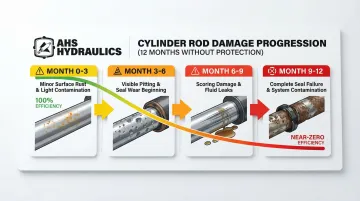
Rod damage creates a destructive cycle. Surface contamination—whether rust, pitting, or scoring—acts like sandpaper against rod seals. Damaged seals allow more contaminants to enter, accelerating wear throughout the system.
70-80% of hydraulic system failures stem from fluid contamination, with scored or corroded rods serving as the primary entry point. Once contamination enters the hydraulic fluid, it circulates through pumps, valves, and other cylinders, multiplying repair costs exponentially.
Safety and Operational Risks
Damaged cylinder rods create serious safety hazards. Fluid leaks from compromised seals create slip hazards and fire risks.
Internal leakage caused by seal damage leads to unpredictable cylinder drift, where loads move without operator input, creating crushing hazards for personnel working near the equipment. Severe piston rod failures from fatigue or corrosion can endanger anyone in the vicinity.
Cost Comparison: Prevention vs. Replacement
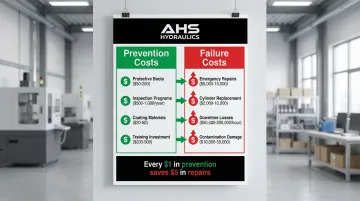
The financial case for rod protection is compelling:
- Protective boots and bellows extend cylinder life by up to 3x
- Preventive maintenance programs reduce costs by 70%
- Every $1 in predictive maintenance saves up to $5 in repairs
- Emergency repairs cost 3-5 times more than planned maintenance
The general industry threshold for repair versus replacement is 50-60%—if repair costs exceed half the price of a new cylinder, replacement becomes the better option. With these economics, investing in rod protection delivers rapid ROI within 8-12 months.
Common Threats to Hydraulic Cylinder Rods
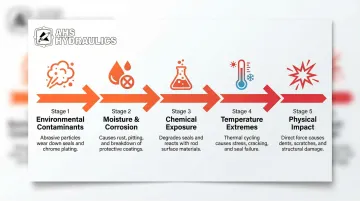
Cylinder rods endure constant assault from contaminants, moisture, chemicals, and physical impacts—often simultaneously. Understanding these threats is the first step toward effective protection.
Environmental Contaminants
Dust, dirt, metal chips, wood debris, and abrasive particles are the primary enemies of cylinder rods. These contaminants adhere to exposed rod surfaces and get pulled past seals during retraction, causing internal damage that spreads throughout the hydraulic system.
Hard particles like silica, metal chips, or dried concrete dust act like sandpaper, creating longitudinal scratches (scoring) that break the critical fluid film between rod and seal. Abrasive wear and surface fatigue account for 90% of component failures in hydraulic systems.
Industry-specific contaminants include:
- Welding/Fabrication: Molten spatter that instantly pits chrome plating
- Firewood Processing: Sawdust and wood debris that pack around seal glands, absorbing moisture
- Agriculture: Soil, fertilizers, and crop residue that create abrasive slurries
- Construction: Concrete dust and rebar fragments that score rod surfaces
- Mining: Rock dust and mineral particles with extreme hardness
Moisture and Corrosion
Humidity, rain, condensation, and washdown procedures cause surface rust that develops into pits on exposed cylinder rods. Chrome plating is porous, containing a network of micro-cracks that allow moisture and oxygen to penetrate to the base metal.
This causes corrosion from the inside out, leading to blistering and flaking that destroys seals. Even minor surface rust creates rough spots that compromise seal integrity and accelerate wear. In salt spray environments, unprotected rods corrode rapidly—however, rods treated with MIL-PRF-16173 compliant preventives can withstand 864 to 960 hours of salt spray without corrosion.
Chemical Exposure
Certain chemicals attack rod plating and base metal:
- Salt and brine (marine applications, winter road maintenance)
- Strong acids (concentrated phosphoric acid, industrial cleaners)
- Alkalis (certain industrial solvents)
- Agricultural chemicals (fertilizers, pesticides)
- Incompatible hydraulic fluids
- Chlorinated solvents
Chemical damage can weaken the rod surface before visible corrosion appears, making it particularly difficult to detect. Steel is rated only "Fair" for salt water compatibility, requiring aggressive protection in marine environments.
Extreme Temperatures
High heat from welding operations, engine proximity, or direct sunlight can damage rod surfaces and coatings. Extreme cold affects material properties and coating adhesion. Thermal cycling—repeated expansion and contraction—stresses rod coatings and can cause them to crack or delaminate.
Temperatures above 165°F (74°C) can cause standard seals to lose elasticity, requiring specialized fluorocarbon seals and heat-resistant rod boots. Conversely, extreme cold makes seals brittle and less effective at wiping contaminants from rod surfaces.
Physical Impact and Abrasion
Rods suffer damage from falling objects, contact with other equipment, and improper handling during maintenance. Misalignment of the cylinder by just five degrees can reduce service life by 50% through uneven wear on rods and seals.
Paradoxically, protective boots that trap contaminants between the boot and rod can cause continuous abrasion, making proper boot selection and maintenance critical.
Essential Protection Methods for Cylinder Rods
Effective rod protection combines multiple approaches based on your operating environment and equipment usage patterns. No single method provides complete protection—layered strategies deliver the best results.
Protective Boots and Bellows
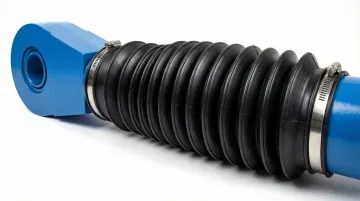
Rod boots are accordion-style covers that expand and contract with cylinder movement, shielding rods from environmental exposure while allowing normal operation. Selecting the right material is critical for effective protection.
Material Selection Guide:
| Material | Temperature Range | Best Applications |
|---|---|---|
| Neoprene-Coated Nylon | -60°F to 250°F (-51°C to 121°C) | General industrial, construction, automotive; resistant to oil, grease, and moderate chemicals |
| Hypalon-Coated Nylon | -60°F to 300°F (-51°C to 149°C) | Outdoor equipment, chemical processing; superior resistance to oxidizing acids, ozone, and weather |
| Silicone-Coated Fiberglass | -100°F to 450°F (-73°C to 232°C) | High-temperature environments, foundries; resistant to ozone and moderate chemicals |
| Aluminized Fiberglass | -100°F to 550°F (-73°C to 288°C) | Welding environments, steel mills; 95% reflective heat property, non-combustible, sheds spatter |
| Kevlar (Aramid) | High heat tolerance | Forestry, mining, demolition; extreme cut and abrasion resistance (Level F, >30 Newtons) |
| PTFE-Coated Fiberglass | -100°F to 500°F (-73°C to 260°C) | Chemical plants, corrosive wash-down areas; chemical inertness resists almost all industrial fluids |
Installation Considerations:
- Ensure proper sizing—boots that are too tight restrict movement, while loose boots allow contamination
- Use Velcro or clamp mounting systems for easy removal during inspections
- Provide venting for high-speed cylinders to prevent pressure buildup
- Include access provisions for periodic rod inspection without complete boot removal
Beyond physical barriers like boots and bellows, how you store equipment between uses plays an equally critical role in protection.
Proper Storage Practices
Improper storage causes premature cylinder failure before equipment is even put into service. Cylinders stored outdoors without protection can suffer irreversible rod corrosion.
Storage Best Practices:
- Always store cylinders fully retracted so rods remain inside cylinders immersed in hydraulic fluid
- Indoor storage is essential—use climate-controlled or at least covered areas to minimize moisture exposure
- Store vertically with rod facing up to prevent seal damage and internal corrosion from condensation
- When outdoor storage is unavoidable and retraction isn't possible, apply heavy-duty rust inhibitors to exposed rod surfaces
- Install check valves on stored cylinders filled with fluid to allow thermal expansion without over-pressurization
Protective Coatings and Lubrication
For extended storage periods or seasonal downtime, apply protective coatings to exposed rod surfaces.
Coating Options:
- Heavy, tacky grease (wheel bearing grease)—provides thick barrier against moisture and contaminants
- MIL-PRF-16173 compliant compounds—Grade 1 (hard film) or Grade 2 (soft film) provide 864 to 960 hours of salt spray protection
- Field mix solution—60% oil-based rust inhibitor and 40% kerosene for readily available protection
- Specialized protective sprays—designed for temporary rod protection during transport or storage
Application Technique:
- Apply thorough coverage of entire exposed rod surface
- Reapply every 3-4 months for long-term storage
- Inspect and renew coatings every six months minimum
- Clean rod surfaces before applying fresh coatings
Regular Cleaning and Inspection
Establish routines for cleaning rods before retraction to prevent contamination from being pulled into cylinders.
Inspection Process:
- Visual checks for rust spots, pitting, scratches, and seal damage
- Look for oil beads on the rod (sign of seal failure)
- Check for early signs of coating failure or chrome blistering
- Verify wiper condition—damaged wipers allow contaminants to enter
- Document findings with photos to track degradation over time
Catching damage early allows for repolishing or replating before complete cylinder failure occurs. Light scoring can often be polished out with 600-grit emery cloth, while moderate scoring may require spot rechroming at 30-50% less cost than full rod replacement.
Operating Practices That Minimize Exposure
Your daily operating habits have a bigger impact on rod longevity than you might think.
Best Operating Practices:
- Retract cylinders during non-use periods—even for hours or overnight
- Maintain optimal cycle patterns—equipment used regularly has natural protection from thin oil film on rods
- Ensure proper hydraulic fluid maintenance—test oil cleanliness (ISO particle count) and change filters quarterly
- Avoid side-loading—verify alignment to prevent uneven wear (misalignment >5° reduces life by 50%)
- Listen for warning signs—hissing sounds indicate internal bypass, jerky movement signals contamination
Quality Equipment Selection
Cylinder construction quality directly affects vulnerability to damage. Superior materials, better plating, and precision manufacturing result in more durable rods that resist corrosion and wear better than lower-quality alternatives.
HydraWolf's in-house fabrication with North American-sourced raw materials and rigorous quality control produces cylinders that are precision-machined to exacting tolerances, providing smooth, consistent power and extended service life. Investing in quality cylinders from reputable manufacturers reduces long-term maintenance burden and protection requirements.
Inspection and Maintenance Schedule
Recommended Inspection Schedule
| Frequency | Tasks | Critical Checkpoints |
|---|---|---|
| Daily/Pre-Shift | Visual inspection | Check for fresh scores, dents, nicks; inspect for oil beads (seal failure); verify wiper condition; wipe rods clean before retraction |
| Weekly | Fluid & operation check | Examine hydraulic fluid color (darkening indicates oxidation/contamination); listen for hissing (internal bypass) or jerky movement; inspect boot condition for tears or detachment |
| Monthly | Detailed inspection | Check for rust spots; examine seal condition; verify protective coating integrity; renew coatings if needed |
| Quarterly/500 Hours | Contamination control | Test oil cleanliness (ISO particle count); change filters; inspect rod boots for tears or detachment; detailed rod surface examination |
| Semi-Annually | Storage inspection | For stored cylinders: inspect exposed rods for pitting; reapply rust inhibitors; rotate horizontally stored cylinders to lubricate seals |
| Annually | Comprehensive assessment | Check cylinder mounting hardware for looseness or wear; verify alignment to prevent side-loading; professional inspection for heavily-used equipment; boot replacement if showing wear |
These baseline intervals work for moderate-duty applications. Adjust based on your operating conditions.
Adjusting Schedule Based on Conditions:
- Continuous outdoor use: Increase to daily detailed inspections
- Abrasive environments (mining, demolition): Weekly comprehensive checks
- Chemical exposure: Daily visual checks, weekly detailed inspections
- Protected indoor use: Monthly inspections may suffice
- Seasonal equipment: Pre-season and post-season comprehensive assessments
Catching seal wear early saves 40-60% of repair expenses versus running to failure. For firewood processors, log splitters, and construction equipment, HydraWolf Hydraulics stocks replacement seals, boots, and rod components to minimize downtime when maintenance identifies wear.
Best Practices for Long-Term Cylinder Rod Protection
Develop a documented protection protocol specific to your equipment and operating environment rather than relying on reactive maintenance. Generic approaches fail because they don't account for your unique combination of contaminants, operating cycles, and environmental conditions.
Beyond documentation, training creates your frontline defense. Operators and maintenance staff need instruction on:
- Proper cylinder handling techniques
- Daily cleaning procedures (wiping rods before retraction)
- Early damage recognition signs
- Why prevention matters (avoiding thousands in repair costs)
When operators understand how simple actions like wiping rods clean before retraction prevent expensive failures, they become active participants in protection rather than passive equipment users.
Finally, detailed record-keeping transforms reactive maintenance into strategic prevention. Track inspection findings, protection measures applied, and damage incidents to reveal patterns you'd otherwise miss.
This documentation might show cylinders on the north side of your facility corrode faster due to weather exposure, or equipment in a specific application needs more frequent boot replacement. These insights let you refine protection strategies and direct maintenance resources where they deliver the greatest impact.
Frequently Asked Questions
What is a rod boot?
A rod boot is an accordion-style protective cover made from materials like Kevlar, neoprene-coated nylon, or aluminized fiberglass that wraps around hydraulic cylinder rods. It expands and contracts with cylinder movement, shielding rods from contaminants, moisture, and physical damage.
What is the purpose of a rod seal?
Rod seals prevent hydraulic fluid from leaking while keeping contaminants out of the system. They rely on a microscopic oil film between the seal lip and the smooth rod surface. Damaged rods quickly destroy these seals, causing fluid leaks and system failure.
What is the best lubricant for a hydraulic cylinder?
For external rod protection during storage, use heavy grease like wheel bearing grease or MIL-PRF-16173 compliant compounds. Internal lubrication comes from the hydraulic fluid itself, which should meet manufacturer specifications. Never substitute external greases for hydraulic fluid.
How to stop a hydraulic cylinder from creeping?
Cylinder creeping (uncommanded movement under load) is usually caused by internal or external seal leakage, often from scored or contaminated rods. Proper rod protection prevents the contamination that damages seals and causes creeping.
How often should protective boots be replaced?
Boot replacement depends on material, environment, and usage intensity. Replace boots showing tears, excessive wear, loss of flexibility, or incomplete rod coverage. Kevlar boots in abrasive environments may require annual replacement, while indoor applications can last several years.
Can a pitted cylinder rod be repaired?
Light scoring can often be polished out in-house using 600-grit emery cloth. Moderate damage can sometimes be repolished and replated by professionals, costing 30-50% less than replacement. Significant pitting or deep scoring (>0.005 inches) usually requires complete rod replacement, making prevention far more cost-effective.